April 13, 2026

In the shifting landscape of Vietnam’s private sector, the successor generation (commonly known as F2) is step by step stepping into the spotlight. Far from being mere “inheritors” staying behind the scenes, this class of young entrepreneurs is becoming deeply involved in the operations, management, and strategic planning of their family businesses.
Growing up in privilege, they nonetheless face significant pressure: not only to maintain but to expand the “empires” built by the previous generation. In this context, the clear emergence of F2 reflects not just a powerful transfer of power, but a force shaping a new identity for Vietnam’s private economic sector.
Amidst the multi-dimensional stories of this successor generation, Trần Khang Duy—CEO of The Odys Boutique Hotel, BÚP Sky Cuisine, Long Hải Securitas, and EXO Travel—stands out as a representative face of self-reliance, striving to transcend the “born with a silver spoon” stereotype.
Part of the 8x generation, Duy has lived independently abroad since the age of 16. Upon returning from his studies, he didn’t follow a pre-paved path but started from foundational roles such as server and housekeeping. This step-by-step climb allowed him to accumulate practical experience before taking on corporate governance.
As an F2 entrepreneur managing a family business, could you share the biggest clashes or difficulties you faced in the early stages?
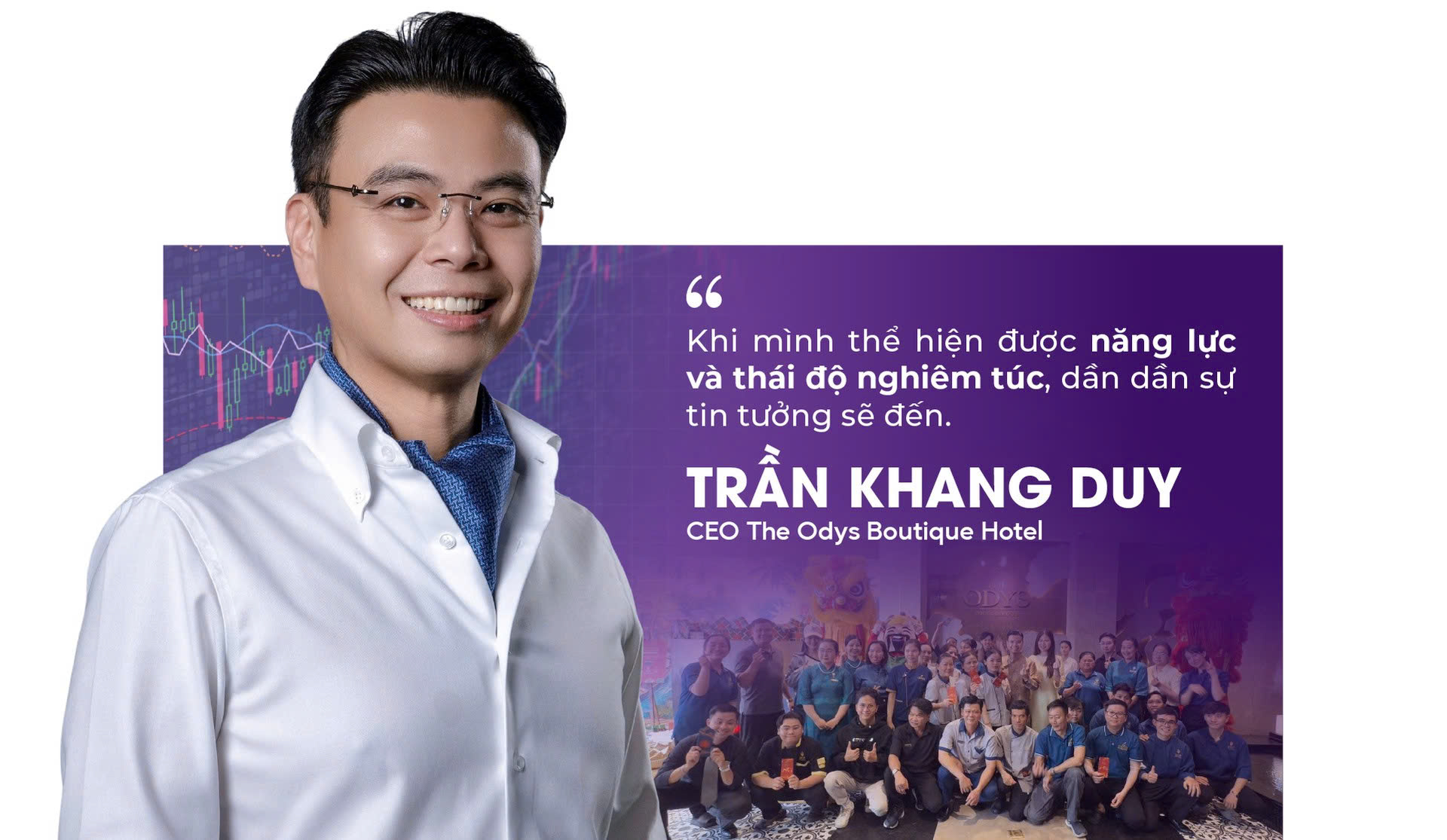
The biggest difficulty for me wasn’t the technical work, but the “distance” from the team. When I started, despite my educational background and being appointed to a management role early on, there was a certain gap in the eyes of many long-standing seniors who had been with the company for decades.
My approach wasn’t to force that gap closed immediately, but to prove my competence through action: arriving early, staying late, working alongside everyone, and having lunch with the staff. When you demonstrate capability and a serious attitude, trust gradually follows.
In your opinion, where is the difference in management style between the previous and current generations most evident?
The biggest difference lies in mindset and management tools. The previous generation was accustomed to manual processes, paperwork, and experience-based workflows. In contrast, the current generation, like myself, has been exposed to digital management systems from the start.
For example, at my company, we have had an integrated management system since 2015: leave requests, timekeeping, performance tracking… everything is done on a digital platform with clear KPIs. This provides much better transparency and control compared to traditional methods.
However, it must be said that this difference sometimes creates conflict. Some long-term employees tend to stick to old ways and aren’t ready to change, creating a certain “inertia” when implementing new systems.
Does applying KPIs and clear performance evaluations make the work environment feel too strict?
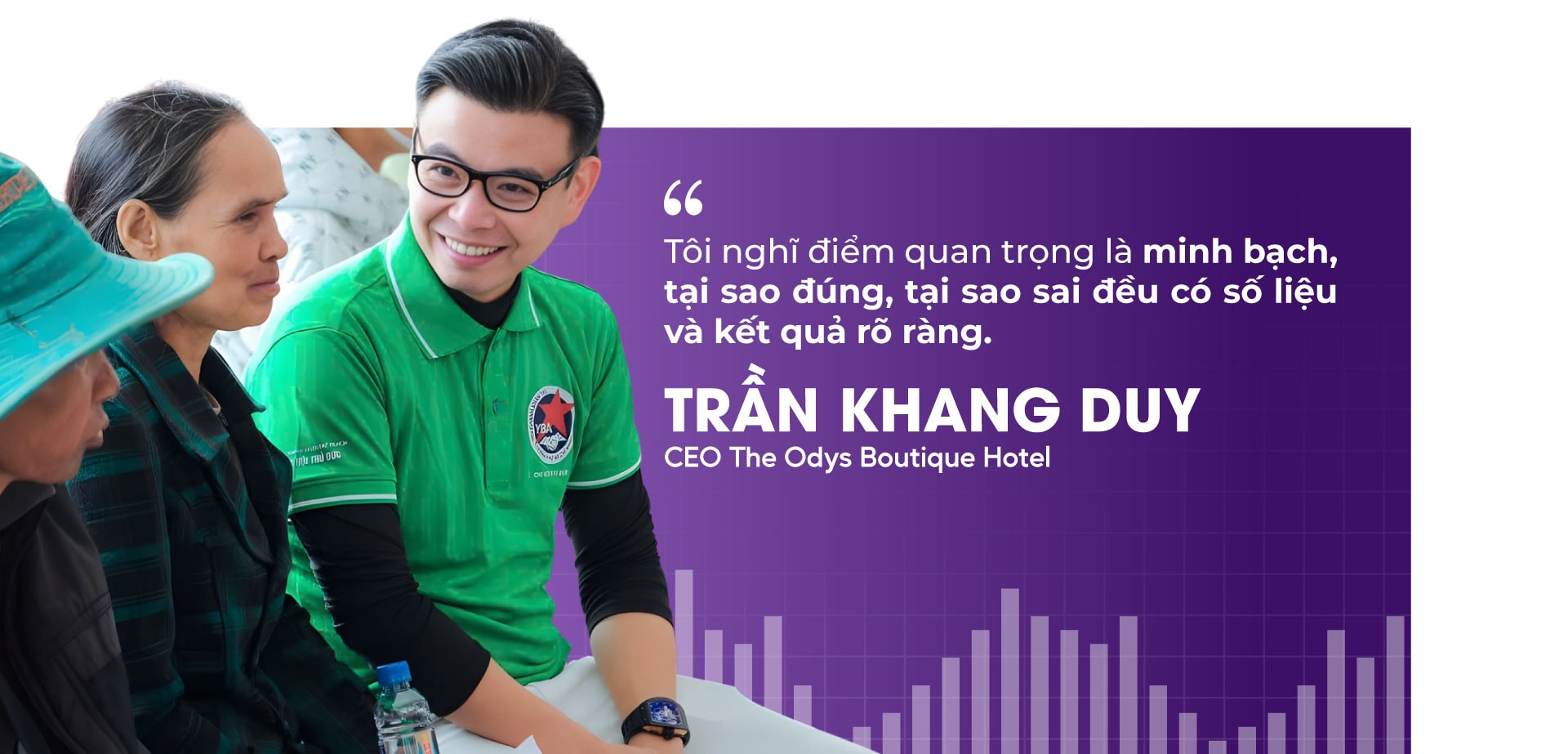
It may be perceived as “strict,” but not in a negative sense. Here, every decision is based on data and long-term tracking, not intuition.
There are cases where personnel who aren’t a fit must be changed, but that only happens after a period of adaptation, specific guidance, and evaluation. Once the system proves its effectiveness, those involved understand why the decision was made. I believe the key is transparency—why something is right or wrong is backed by clear figures and results.
You mentioned that your generation had access to digital management from the start and your business has applied it since 2015. How do you evaluate the role of technology and digitalization in the service industry, especially in Tourism and Hospitality?
I see technology changing this industry profoundly. Previously, customers had to go through consultants to plan a trip; now, they can do everything on digital platforms: choosing destinations, hotels, itineraries…
Businesses also leverage technology to optimize operations: from HR and finance to business data analysis. For instance, the system The Odys Boutique Hotel currently uses helps track work progress, personnel files, cash flow, and even investment efficiency in near real-time. This significantly increases processing speed and reduces dependence on manual workflows.
Does the application of technology in service operations reduce the role and quality of direct human interaction, given that the service industry needs that “touch” to reach a customer’s emotions?
This is what concerns me most. Technology helps with speed, standardization, and cost optimization, but if overused, it erodes human-to-human interaction.
Currently, many hotels and restaurants automate heavily: from check-in and ordering to customer care. But after the COVID-19 pandemic, I realized one thing clearly: customers, especially older ones, miss communication and emotional connection.
Therefore, we proactively focus on the human element, strengthening our guest relations team to interact throughout the stay—chatting, checking in, and providing direct support. This not only creates a better experience but also improves guest ratings on online platforms.
So, which tasks can technology replace, and where does the human role remain irreplaceable?
Technology is highly effective in management and operations, such as task assignment, progress tracking, timekeeping, HR records, accounting, financial reporting, and data analysis. Doing these manually is not only time-consuming but carries the risk of error.
However, in elements involving emotion and experience, humans remain central. From direct communication and handling guest situations to building rapport and empathy—these require a level of flexibility and subtlety that technology struggles to replicate. Especially in service, customers aren’t just using a product; they are seeking an experience, and that core value is still created by people.
You mentioned customers are looking for experiences. Specifically, how have you seen customer behavior change?
Customers today are “tougher,” but in a positive way. They research very thoroughly before using a service; they almost have all the information before they even ask us. Additionally, they are willing to pay more, but in return, the requirements for quality and experience are much higher. This forces businesses to be more professional and insightful—not just knowing our own product, but having the holistic knowledge to provide expert advice.
Looking back at your journey, what was the most difficult period you went through?
The toughest time was during the COVID-19 wave in 2021, when I took in a delegation of medical professionals right before the lockdown phase. In the first 30 months, the business suffered continuous losses, ranging from 400 to 650 million VND per month. At one point, I even considered closing down.
At the same time, the General Manager (GM) resigned, followed by 21 other employees—mostly management level—leaving only 13 staff members, mainly young personnel across departments. The operational machinery was in chaos, with only two department heads remaining: Accounting and Engineering.
During that shortage, I directly took on the role of General Manager and have maintained that operational leadership until now, despite my limited practical experience at the time (relying mostly on my Master’s degree in Hospitality from Florida International University). Furthermore, pivoting the model to host medical teams helped the business stay operational and gradually overcome the crisis.
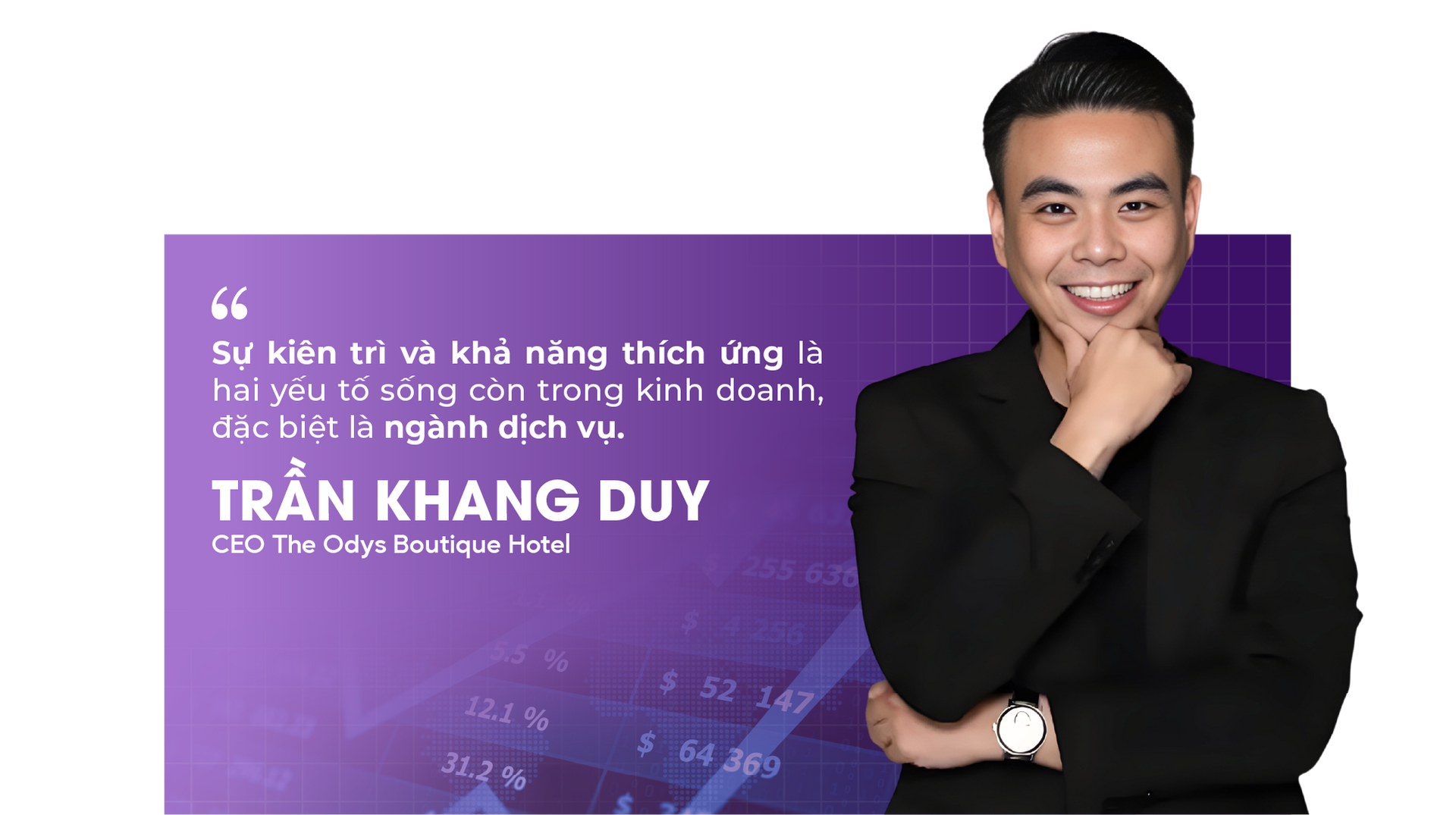
I believe surviving that period came down to a management style based on trust, listening, and collaborative analysis. The team didn’t focus on individual right-or-wrong but on supporting each other and learning from mistakes to prevent them from recurring. That experience helped me understand resilience and adaptability—two vital factors in business, especially in service.
What is your forecast for the outlook of the Tourism and Hospitality industry in the coming time?
I believe that in the next 3–5 years, this industry will continue to grow strongly, averaging about 12–18% per year. Vietnam is an attractive destination in the region, especially as safety and reasonable costs are highly valued.
However, it will no longer be a story of “just open and guests will come.” Competition is increasing, requiring businesses to invest more professionally, improve service quality, and create clear differentiation. Those who master the customer experience and know how to balance technology with the human element will have a massive advantage.